Capability
Turn complex measurements into a clearer engineering decision.
Your instruments capture more than a headline number. They record how a system changes across time, frequency, operating conditions and sensor channels. SPARK develops analytical software and focused evaluations that help engineering and research teams interpret measurements, assess their quality and decide what to investigate next.
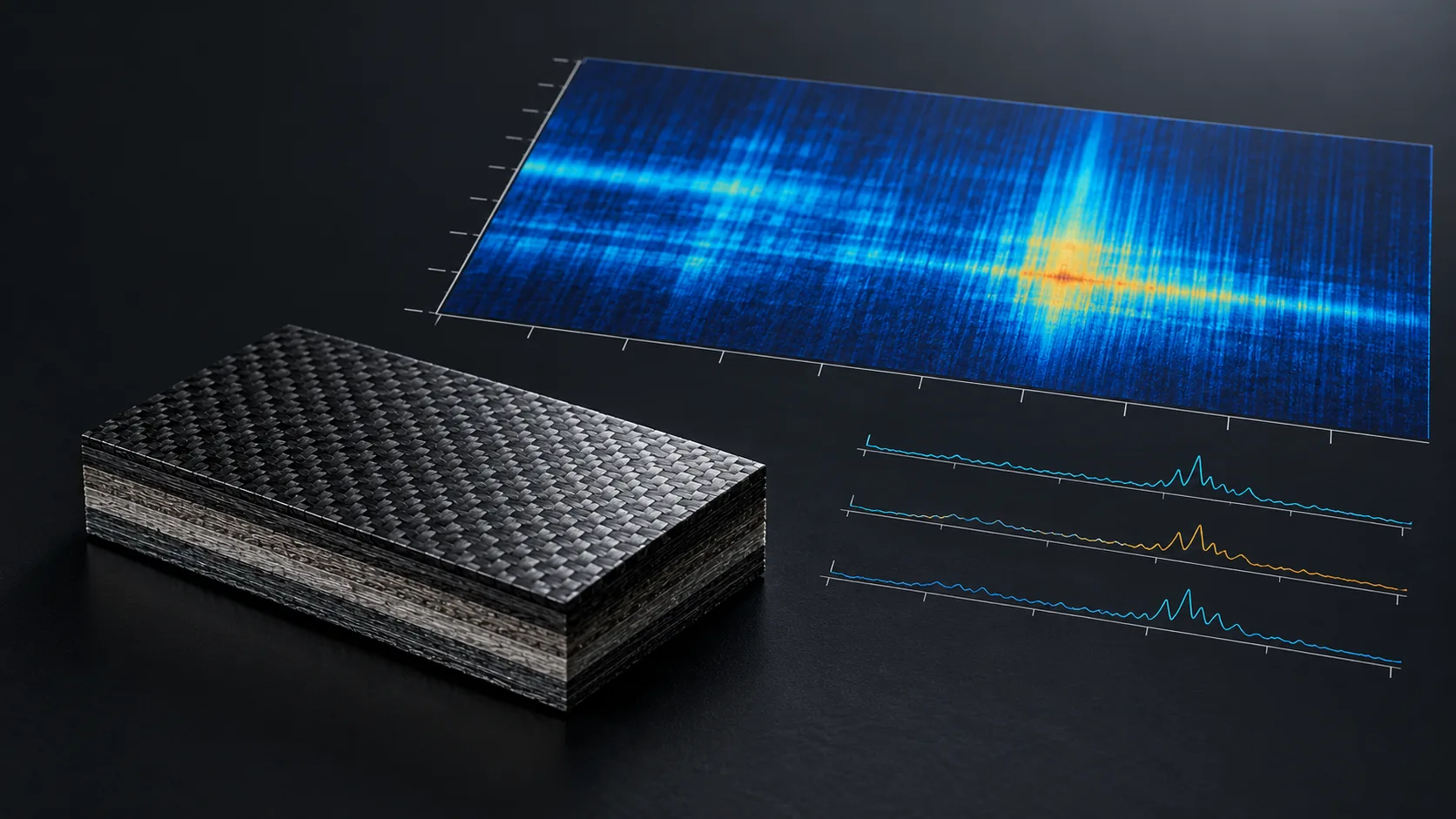
Processing path
- SignalAny measured source
- ConditionCalibrated and cleaned
- RepresentTransformed for analysis
- AnalyzeStructure and change
- DeliverDecision-ready results
A better reading starts with a better question
Bring us a difficult signal question: an unexplained change between receivers, an unstable reference, a repeatability problem, or a measurement that deserves a more detailed reading. We help define the question, examine the available evidence and deliver an analysis your team can inspect and use.
A machine changes its sound. Two receivers disagree. An inspection response shifts between runs. A sensor appears stable even as the conditions around it change. Each situation presents a different engineering question, and each needs an analysis that preserves the details relevant to that question.
SPARK works at that measurement-to-interpretation boundary. We assess acquisition conditions, compare recorded responses and examine the reference used to judge a change, including the effect of calibration choices on the resulting readout. The aim is practical: give your team a more precise account of what the measurements contain and a useful basis for the next decision.
For an equipment team, that decision is often where to look next. For an instrument developer, it is whether a correction preserves the information the instrument is meant to capture. For a scientist, it is which additional observation distinguishes competing explanations. We shape the work around that decision from the start.
What we offer
Signal detail that informs the next test
A single summary value hides how a change develops. We show where a change appears in a recording, which channels share it, how consistently it repeats, and how much of the result depends on the chosen reference. Engineers receive a detailed account of the observed difference and the conditions used to examine it.
This supports focused investigation, comparison of operating conditions and the design of more informative measurements. The work gives a team concrete regions, records and questions to bring into its next inspection or engineering discussion.
Receiver comparison and calibration assessment
Measurements taken through different channels need a meaningful basis for comparison. Differences in sensitivity, timing, offsets and receiver response all influence what a processing system reports.
We compare receiver recordings with declared calibration information, examine candidate references, and assess how an adjustment changes the resulting analysis. Our work keeps the original observations available for comparison and gives the engineering team a clear view of the correction, its purpose and the information it preserves.
This is valuable when a team needs to separate a change in the instrument chain from a change in the system being measured, or assess whether an existing reference remains suitable across repeated runs and operating conditions.
Repeatability you can see
A repeatable overall score does not show which parts of a measurement hold steady. We show where results repeat across runs, channels and operating conditions, and where they differ, so your team understands whether a conclusion rests on broad support or a narrow slice of the recording.
The resulting comparisons help teams prioritize useful records, evaluate acquisition choices and plan a focused follow-up. An inspection engineer, instrument developer or research group receives an account tied to the measurements and conditions that matter to the task.
For research and development, this turns a general question such as “Is the response stable?” into a more useful set of questions: stable where, over which interval, between which channels, and under which conditions?
Measurement quality made visible
Useful analysis includes the quality of the evidence supporting it. We incorporate available timing, calibration and measurement-error information into the evaluation and show how that information affects the interpretation.
A report distinguishes an observed value from a conclusion supported by the declared measurement quality. It also identifies the additional reference or acquisition information that strengthens the next evaluation. That clarity helps engineering teams prioritize work, document decisions and avoid treating every plotted value as equally informative.
Measurement planning and reference design
More data is most useful when it answers the unresolved question. We help teams compare proposed reference measurements and experimental conditions against the explanations they are trying to distinguish.
For a defined set of candidate responses, analytical tools assess which additional observation provides useful separation. This supports targeted test planning: choose an informative reference, repeat the right condition, or add the measurement that addresses the ambiguity directly.
Analytical software integration
We develop focused analytical components for use alongside an existing data pipeline. Engagements start with the recordings, interfaces and decisions that matter to your team. The integration scope covers input preparation, documented outputs, quality information and a reproducible evaluation of the resulting workflow.
The deliverable is shaped to the task: a reviewed analytical report, a research software component, an integration specification, or a combination of these. Your instrumentation and domain expertise remain central to the work.
Where this work fits
Aerospace, defense and sensing systems
Receiver arrays, radio-frequency sensing, radar and sonar development all depend on reliable interpretation of signals collected through multiple channels. Small changes in the acquisition chain influence comparisons between tests, platforms and operating environments.
SPARK offers scoped evaluations of receiver consistency, reference behavior, timing sensitivity and the effect of processing choices on the result. We work with teams defining an instrument, evaluating a subsystem or examining an unexplained response in recorded data.
Useful starting question: Which observed changes remain informative when the receiver and acquisition conditions are accounted for?
Industrial equipment and manufacturing
Rotating equipment, actuators, production machinery and instrumented processes produce recordings that change with load, speed and operating state. Understanding those changes requires attention to both the machine and the measurement chain.
We help teams examine repeated recordings, compare sensor channels and describe the timing and frequency regions associated with an observed change. A focused evaluation provides an analytical basis for choosing the next inspection, test condition or monitoring feature.
Useful starting question: Where does this operating condition differ from the reference, and how repeatable is that difference?
Materials, composites and nondestructive evaluation
Ultrasonic and acoustic inspection record how a specimen responds to a controlled measurement. Probe placement, coupling conditions, instrument settings and specimen behavior all influence the recorded result.
We support evaluations that compare those responses in detail, examine measurement consistency, and relate analytical features to independently documented test conditions. Work begins with the inspection question and the available specimen references, then develops a reading suitable for comparison and further engineering investigation.
Useful starting question: Which differences in the inspection response track the known specimen condition across repeated measurements?
Energy, infrastructure and process instrumentation
Pumps, compressors, power equipment, pipelines and structural monitoring systems generate large volumes of sensor data. The practical challenge is often to turn a changing signal into a well-defined follow-up action.
SPARK provides analytical evaluations of recorded behavior across operating intervals and sensor channels. We help teams characterize repeatability, examine reference changes and identify the information needed for a stronger comparison. The work complements the asset owner's maintenance expertise, operating records and engineering models.
Useful starting question: Is the observed change consistent across the measurements that matter to this asset and operating condition?
Geoscience, ocean sensing and environmental research
Field recordings reflect acquisition conditions, sensor placement, propagation and the environment being studied. Those factors deserve explicit treatment when records are compared across locations or time.
We support signal studies that retain each data source's context, examine each record within its own measurement conventions and develop documented comparisons for a defined research question. Acoustic, seismic and other instrument records enter the work through their appropriate acquisition and interpretation conventions.
Useful starting question: What remains consistent across the observations, and which additional measurement helps distinguish the competing explanations?
Scientific instruments and advanced research
Instrument builders and research groups need analytical tools that connect a measurement, a reference and an interpretation. SPARK works with teams developing new measurement concepts, examining difficult datasets or evaluating an analytical component within a larger scientific workflow.
Engagements combine a clearly defined question, inspectable software outputs and a record of the data and conditions used. That provides a practical foundation for technical review, collaborative experiments and subsequent integration.
Useful starting question: Which observable provides a reproducible answer to the question our instrument is designed to ask?
Medical-device and biomedical research
Research recordings from acoustic, ultrasonic, electrical and other sensing systems demand careful attention to acquisition and repeatability. SPARK supports analytical research into those recordings, including channel comparison, reference assessment and measurement-quality evaluation.
The work is scoped with the research or device team around a specific experimental question and its documented data. Engagements follow the research team's study protocol and approvals.
Useful starting question: Which responses repeat across the controlled research conditions and acquisition sessions?
What an engagement produces
A clear analytical question
We start by defining the decision your team needs to make and the observations available to support it. That includes the instrument channels, acquisition conditions, known reference states and existing processing outputs. The resulting scope makes success measurable and gives everyone the same technical target.
A detailed reading of the data
The analysis shows where the relevant changes appear across the recording, how well they repeat and how much they depend on the available reference and measurement-quality information. Plots serve the question: comparison views, time-frequency maps, channel comparisons and annotated regions of interest are selected for their explanatory value.
An inspectable evidence package
Deliverables include the agreed report, documented input and output definitions, a record of the data and preparation used, and the supporting artifacts required for technical review. Where software is part of the engagement, the package includes the agreed interface and reproduction instructions.
A useful next step
We explain what the analysis supports and recommend the most informative follow-up: an additional reference, a controlled acquisition, an integration trial or a focused comparison with an existing processing method. The report is designed to move an engineering or research program forward.
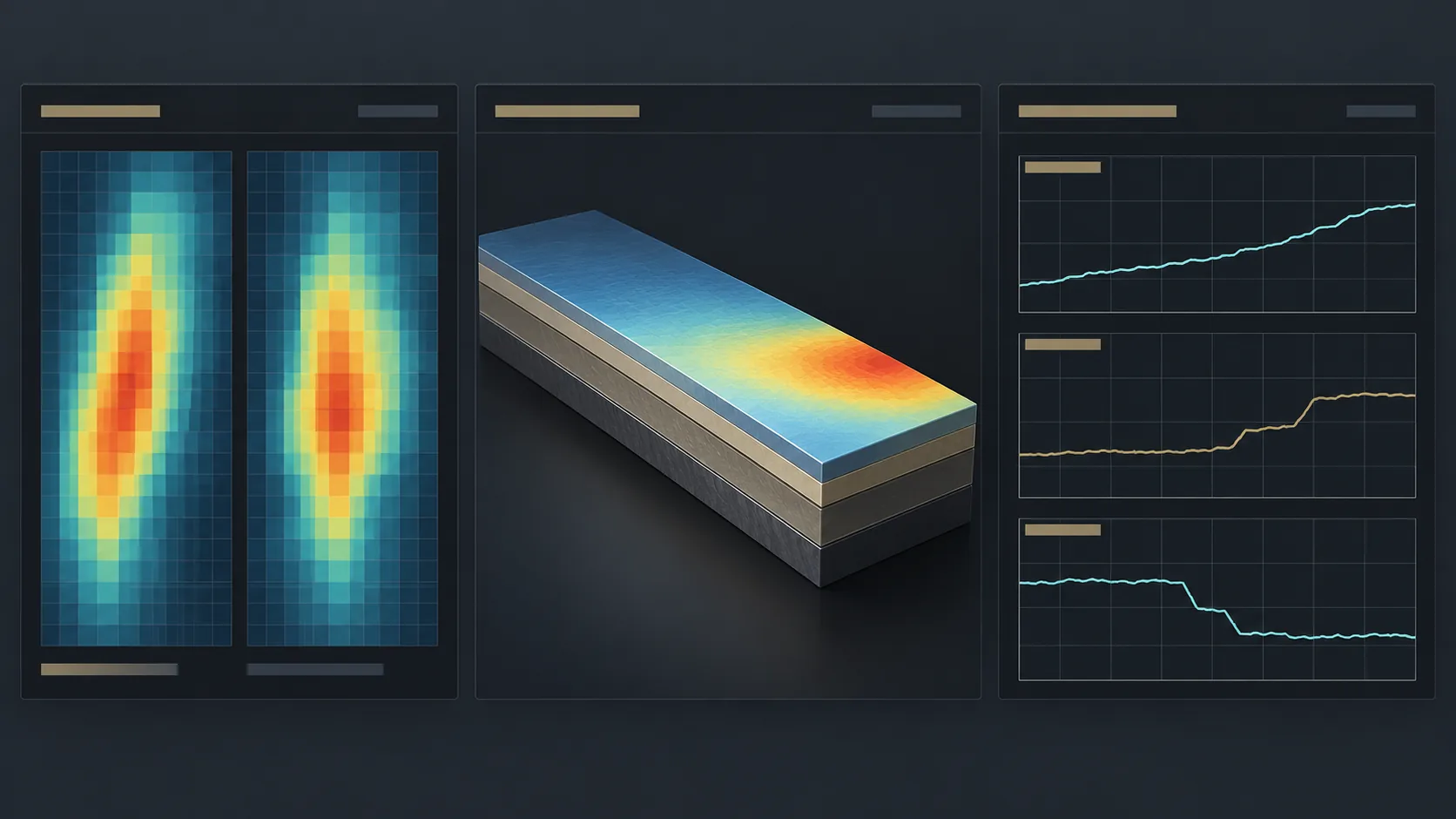
For scientists, engineers and institutions
Analysis built around observables, references and measurement quality
Our signal work examines how preprocessing, receiver calibration and reference selection affect the answer a measurement gives. We work with paired receiver records, repeated observations and frequency responses within a declared acquisition convention.
The analytical scope includes receiver comparison, repeatability across runs, reference coverage and the effect of supplied measurement uncertainty on selected outputs. Every evaluation states its units and acquisition assumptions explicitly.
This gives a technical team several complementary views of the same observations. Reference comparisons, repeatability profiles and measurement-quality information answer different engineering questions. We present them together with the source records so that the team can examine agreement and differences in context. Analytical outputs follow defined calculations and documented inputs, giving technical teams an inspectable result they can reproduce.
Evaluation on the task that matters
An engagement is designed around the partner's operational or scientific question. Suitable reference records, known changes and independent labels establish the comparison. Existing processing provides a practical baseline on the same inputs, with measures selected for the intended decision.
Depending on the scope, those measures include repeatability, sensitivity to a known change, preservation of relevant signal structure, reference coverage, unsupported-output handling and computational cost. The evaluation connects analytical behavior to a defined use case and gives the technical team a reproducible basis for deciding on integration.
A focused component within a larger system
SPARK's role is spectral analysis and analytical software. We contribute a focused layer within the partner's sensing, experimentation or engineering workflow. Acquisition hardware, specimen characterization, system design and domain-specific interpretation remain part of the complete evaluation.
We welcome collaborations with instrument developers, engineering contractors, research institutions and public-sector research teams that have a well-defined measurement challenge. Discussions begin with the use case and the records needed to assess it; detailed implementation information is handled through an appropriate confidential technical exchange.
Questions teams ask us
What kind of data is a useful starting point?
Recordings from the relevant instrument channels, together with acquisition timing, channel definitions, operating conditions and any reference or calibration records. Repeated measurements and independently documented changes make a comparative study more informative. We agree the data format and handling arrangements during scoping.
Do we need to replace our existing processing?
The initial evaluation sits alongside your current workflow. It compares the agreed analytical outputs on the same records and establishes where an additional view helps the team's decision. Integration follows the defined task and interfaces.
Can you work on an unfamiliar application?
Yes. The first step is to connect the signal question to the instrument and the decision. We assess the available recordings and references, then define a focused evaluation with the domain team. A strong collaboration combines your knowledge of the system with our analytical software and measurement interpretation.
What does a technical discussion involve?
Tell us what is being measured, what changed or remains unclear, and what an improved answer enables. A high-level description is enough to begin. We then agree the scope, confidentiality arrangements, data access and deliverables before detailed technical work.
Bring us the signal question worth answering
Whether you are evaluating a sensing subsystem, investigating an unexplained response or planning a new measurement program, SPARK offers a focused route from recorded data to an inspectable analytical result.
Tell us about your application, the decision you need to make and the recordings available. We will help define the right evaluation.